Can Pressure Washing Remove Oil Stains?
Pressure washing can improve many oil stains, but complete removal is not always possible. The outcome depends on the stain’s age, depth, type of fluid, concrete condition, and previous treatments.
Quick Answer
Sometimes—but results vary. Fresh surface oil may improve dramatically when treated quickly. Older stains often become lighter, but some discoloration may remain because concrete is porous and oil can travel beneath the surface.
Why oil stains are different from ordinary dirt
Dirt, pollen, algae, and other surface buildup often remain near the top of concrete. Oil behaves differently. Because concrete contains tiny pores, oil can soak beneath the visible surface instead of staying where it was spilled.
The longer the oil remains untreated, the deeper it may travel. That is why a fresh spill is usually easier to improve than a stain that has been present for months or years.
Did You Know?
A stain may look small at the surface while spreading farther beneath the concrete. Cleaning the visible area does not always remove oil that has already penetrated deeper into the slab.
What pressure washing can—and cannot—do
Professional pressure washing can remove surface grime, loosen contaminated residue, and improve the overall appearance of concrete. Specialized cleaners and degreasers may also help break down oil near the surface.
Pressure alone, however, cannot always pull deeply embedded oil back out of the concrete. Using excessive pressure in an attempt to force a perfect result can permanently etch or scar the surface.
More pressure removes more oil.
Increasing pressure does not guarantee deeper stain removal and may damage the concrete.
The process matters more than brute force.
Proper pretreatment, dwell time, rinsing, and realistic expectations matter more than simply using maximum pressure.
Five factors that affect oil-stain removal
1. The age of the stain
Fresh oil is generally easier to absorb and treat. Older stains have had more time to penetrate and may leave lasting discoloration.
2. The type of oil or fluid
Motor oil, transmission fluid, hydraulic fluid, grease, and other automotive products can react differently with concrete. Some may darken the surface more deeply than others.
3. The porosity of the concrete
Older, weathered, unsealed, or highly porous concrete may absorb oil more quickly than smoother or sealed surfaces.
4. Previous treatments
Household cleaners, bleach, absorbent products, paint, or prior pressure washing may change the appearance of the stain or make the final result less predictable.
5. Surface wear and damage
Cracks, pitting, scaling, and worn areas can trap residue and make discoloration harder to improve evenly.
What kind of improvement is realistic?
No professional can accurately guarantee complete oil-stain removal without evaluating the surface. A responsible expectation is improvement—not automatic perfection.
| Stain Condition | Likely Outcome | Important Consideration |
|---|---|---|
| Fresh spill | Often shows strong improvement | Fast treatment gives the best opportunity to absorb and break down surface oil. |
| Recent stain | May lighten significantly | Some oil may already have entered the concrete pores. |
| Older embedded stain | May improve but remain visible | Deep discoloration can remain even after surface contamination is removed. |
| Repeated vehicle leak | Results may be limited or uneven | Repeated saturation usually penetrates deeper and covers a wider area. |
Prestige Pro Tip
Never judge professional cleaning only by whether every dark mark disappears. The driveway may be significantly cleaner even when deeply embedded discoloration remains.
Improvement without false promises
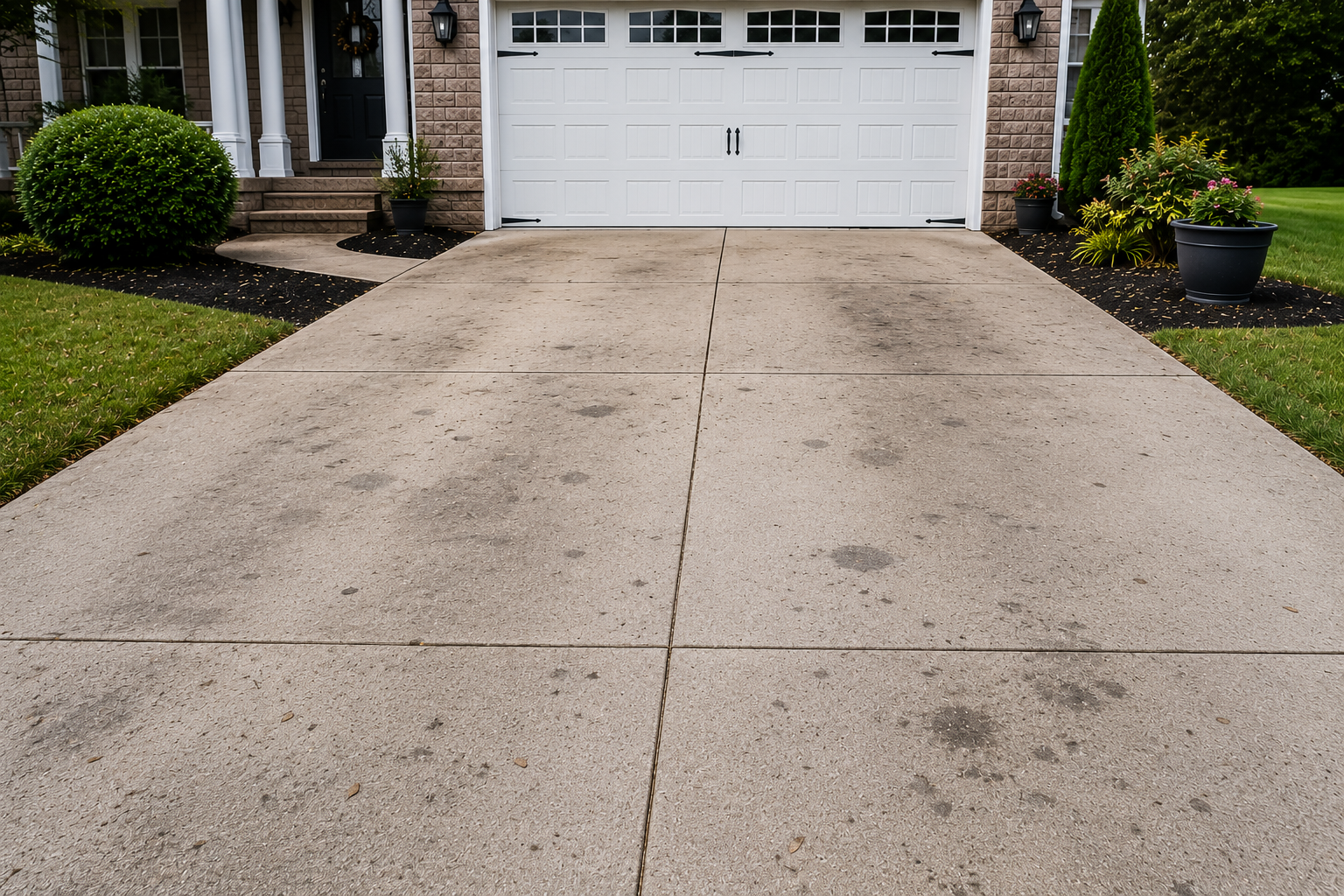
These images demonstrate why honest expectations matter when dealing with oil-contaminated concrete.
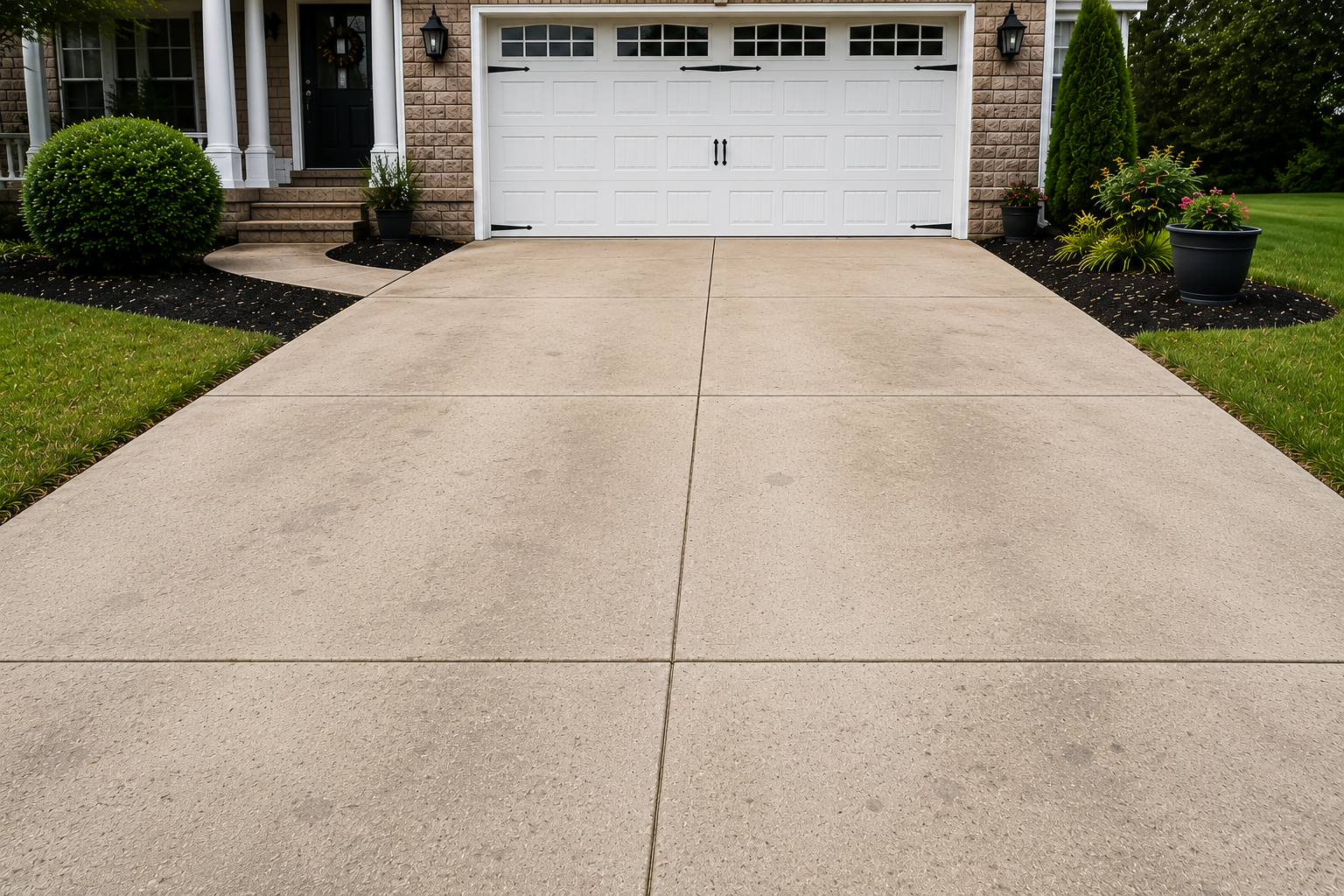
Every driveway is different. Concrete age, stain depth, weathering, prior treatments, and repeated exposure all influence the final outcome.
Oil-stain removal questions
Can a professional guarantee complete oil-stain removal?
No. A professional may be able to estimate the likely improvement after inspecting the driveway, but deeply absorbed oil can leave permanent discoloration.
Will pressure washing alone remove an oil stain?
Sometimes surface residue improves with pressure washing, but pretreatment and degreasing are often needed. Even then, deeply embedded staining may remain.
Does treating a fresh spill quickly help?
Yes. Removing excess oil and treating the area promptly can reduce the amount that penetrates the concrete.
Can too much pressure damage concrete?
Yes. Excessive or uneven pressure can etch lines, expose aggregate, or create permanent surface damage.
Can an older stain still be improved?
Often, yes. Older stains may become noticeably lighter, but complete removal is less likely after oil has soaked deeply into the concrete.
Wondering if your oil stain can be improved?
Every driveway is different. Tell us about the stain, how long it has been there, and upload a few photos if possible. We’ll give you an honest assessment and a free estimate.
Our goal is to set realistic expectations while helping you achieve the best possible improvement.