Soft Washing vs. Pressure Washing
Both methods can produce excellent results when used correctly. The important difference is how much pressure is applied, what cleaning process is used, and which exterior surface is being treated.
Compare the Methods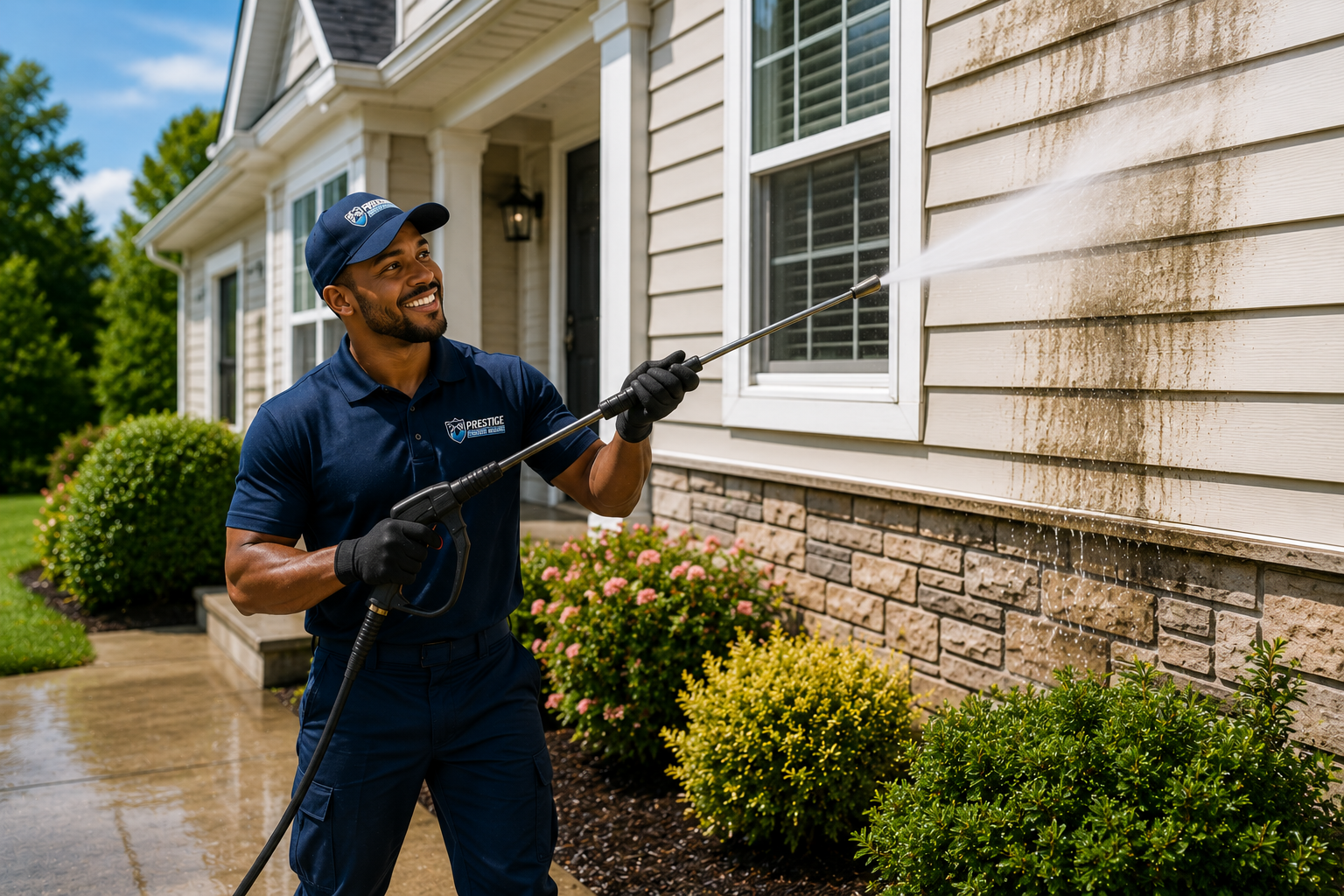
Quick Answer
Soft washing uses lower pressure and a surface-appropriate cleaning process for siding and other more delicate materials. Pressure washing uses controlled water pressure for durable hard surfaces such as many concrete driveways and sidewalks. Neither method is automatically better—the correct choice depends on the surface.
What is soft washing?
Soft washing is an exterior-cleaning method that uses lower water pressure along with an appropriate cleaning process to treat organic buildup such as algae, mildew, and grime. It is commonly used on siding and other surfaces that should not be exposed to unnecessary high pressure.
The cleaning process does more of the work, while the water helps apply and rinse the treatment. This allows the surface to be cleaned without relying on force alone.
What is pressure washing?
Pressure washing uses pressurized water to remove dirt, organic buildup, and loose surface contaminants from durable materials. It is commonly used for many concrete driveways, sidewalks, patios, and other hard surfaces.
Professional pressure washing is not simply using the highest possible setting. The operator must control the equipment, spray pattern, distance, movement, and pressure based on the material and its condition.
How the two methods compare
Soft Washing
Best suited for surfaces that require a gentler approach and treatment of organic growth.
- Lower water pressure
- Relies on an appropriate cleaning process
- Commonly used for siding
- Helps address algae and mildew
- Reduces unnecessary surface stress
Pressure Washing
Best suited for durable hard surfaces when pressure is properly controlled.
- Uses greater water pressure
- Commonly used for concrete
- Removes dirt and surface buildup
- Requires careful technique
- Should be adjusted for surface condition
Which cleaning method is generally used for each surface?
This table provides general guidance. A professional should still inspect the surface, its age, condition, coatings, and type of buildup before choosing a method.
| Surface | Common Method | Why |
|---|---|---|
| Vinyl siding | Soft washing | Lower pressure helps reduce the risk of damage or forcing water behind the siding. |
| Painted siding | Usually soft washing | The paint condition must be considered before cleaning. |
| Stucco | Soft washing or specialty low-pressure cleaning | Stucco can be vulnerable to excessive pressure and surface damage. |
| Brick exterior | Depends on condition | Mortar age, surface condition, staining, and coatings all matter. |
| Concrete driveway | Pressure washing | Concrete is generally more durable, but pressure must still be controlled. |
| Sidewalk or patio | Pressure washing | Hard surfaces often respond well to controlled pressure and proper technique. |
| Wood deck or fence | Depends on material and condition | Wood can be damaged by excessive pressure and may require a gentler process. |
| Composite decking | Manufacturer-guided low-pressure cleaning | Cleaning should follow the material manufacturer’s recommendations. |
How professionals choose the safest method
A responsible exterior-cleaning professional considers more than how dirty the surface looks. The safest method depends on the material, age, condition, coatings, surrounding property, and type of contamination.
Vinyl, brick, concrete, wood, stucco, and composite materials respond differently.
Loose paint, damaged siding, cracked mortar, oxidation, and existing wear affect the plan.
Algae, mildew, dirt, oil, rust, and oxidation require different expectations.
Windows, doors, vents, fixtures, and nearby areas should be considered before cleaning.
Plants and surrounding property should be protected throughout the process.
Cleaning can improve many surfaces, but it cannot reverse permanent damage or wear.
The right method matters more than the strongest pressure.
Soft washing is commonly used for siding and other delicate surfaces, while pressure washing is typically reserved for durable hard surfaces. Professional results come from matching the method to the material.
Common questions about soft washing and pressure washing
These answers provide general guidance for homeowners and property managers.
Is soft washing the same as pressure washing?
No. Soft washing uses lower pressure and a different cleaning process, while pressure washing relies more heavily on controlled water pressure for durable surfaces.
Can pressure washing damage vinyl siding?
Yes, if excessive pressure or poor technique is used. Vinyl siding is generally better suited for a lower-pressure cleaning method.
Does soft washing remove algae and mildew?
Soft washing is commonly used to treat organic growth such as algae and mildew. Results depend on the surface, condition, and type of buildup.
Should concrete be soft washed or pressure washed?
Many concrete surfaces are cleaned with controlled pressure, often with an appropriate pre-treatment or post-treatment when needed.
Is brick always safe to pressure wash?
No. Brick condition, mortar age, coatings, repairs, and staining should be evaluated before selecting a cleaning method.
Which method lasts longer?
How long a surface stays clean depends on shade, moisture, trees, traffic, surrounding conditions, and the type of buildup—not only the cleaning method.
Not sure which cleaning method your property needs?
Every surface is different. Tell us what you’re trying to clean, upload a few photos if available, and we’ll recommend the safest and most effective approach.
We’ll explain whether soft washing, pressure washing, or another method is appropriate for your property and provide a free estimate.